


Turning Tension Into Action – How Lactate, BFR, and Creatine Amplify the Muscle-Building Signal

In Part 3 we explored mechanical tension — the prime demand order that starts with the struggling myosin “rowers” pulling on actin, triggers mechanotransduction, and ultimately produces phosphatidic acid (PA) to kickstart the growth process.
In Part 4, we’ll dive into the signal — how that tension gets translated into the molecular “construction alarm” (mTORC1 activation, satellite cell recruitment, IGF-1, etc.) that actually builds new muscle.
But between the raw physical force of tension and the sophisticated signaling cascade lies a powerful middle layer of amplifiers. These tools take the tension you create and make the downstream signal significantly stronger and more effective.
Three of the most practical and well-researched amplifiers are lactate, Blood Flow Restriction (BFR), and creatine. They don’t replace mechanical tension — they magnify it. Lactate – Not Waste, But a “Lactormone”
For decades we were told lactate was a sign you had gone “anaerobic” and that the burn meant your muscles were drowning in acid. That story is outdated.
Modern reality: Lactate is produced even when plenty of oxygen is available (aerobic glycolysis). During heavy sets — the exact moment your “rowers” (myosin heads) are struggling hardest — glycolysis ramps up fast. Some of the pyruvate is converted to lactate.
Lactate is far more than a metabolic “waste product” or fatigue culprit. George Brooks’ Lactate Shuttle Theory (developed since the 1980s and continually refined) reframed lactate as a central player in energy metabolism and cell communication. It is produced continuously — even under fully aerobic conditions — and serves dual critical roles: fuel and signaling molecule. Here’s the detailed picture, with direct relevance to muscle building and the Protein Paradox series.
This lactate does two powerful things:
1. Lactate as Fuel (The Lactate Shuttle)
Lactate is not “dead-end” waste. It is a highly mobile energy carrier that links glycolysis (fast ATP production) with oxidative metabolism.
Intracellular Lactate Shuttle: In a single muscle fiber, glycolysis in the cytosol produces pyruvate → much of it is converted to lactate. Lactate then moves into mitochondria (via monocarboxylate transporters, MCTs) where it is oxidized back to pyruvate and fed into the Krebs cycle for efficient ATP production. This shuttle allows rapid glycolytic flux without overwhelming the mitochondria.
Cell-to-Cell Shuttle: Lactate produced by fast-twitch (glycolytic) fibers or working muscle is exported and taken up by:
Slow-twitch fibers (for oxidation).
Heart muscle (preferred fuel during intense work).
Liver (for gluconeogenesis — Cori cycle).
Brain (lactate is a preferred fuel for neurons, especially during high activity).
Other tissues.
During heavy resistance training (the “struggling rowers” phase), lactate production surges even when oxygen is available. This lactate is shuttled and reused, preventing wasteful buildup while supplying quick energy to oxidative tissues.
Practical note for Alex: The burn he feels during heavy sets isn’t “acid poisoning” — it’s high glycolytic flux producing lactate that is actively shuttled and used. Training that produces more lactate (e.g., higher reps, shorter rest, blood-flow restriction) can improve the body’s ability to shuttle and oxidize it, enhancing endurance and recovery capacity.

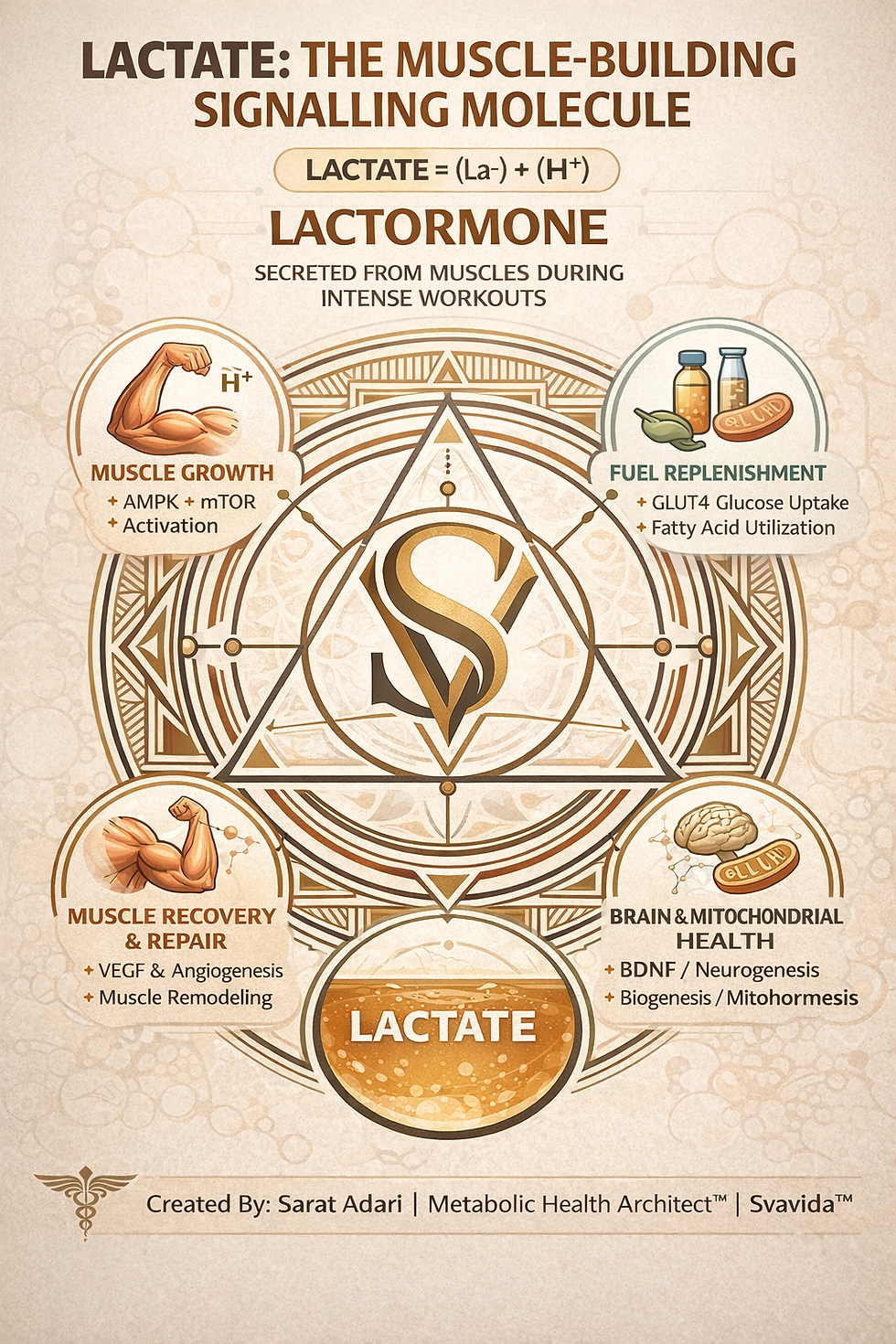
Lactate as a Signaling Molecule (“Lactormone”)
This is where lactate becomes truly exciting for hypertrophy. Lactate acts like a hormone (sometimes called a “lactormone” or exerkine) that influences gene expression, inflammation, adaptation, and muscle growth.
Key mechanisms:
Receptor-Mediated Signaling: Lactate binds to GPR81 (also called HCAR1), a G-protein-coupled receptor expressed in muscle, adipose tissue, brain, and other tissues. Activation of GPR81 triggers downstream pathways including cAMP reduction, ERK, and PI3K/Akt signaling.
Epigenetic Regulation via Lactylation: Lactate serves as a substrate for histone lactylation (and protein lactylation). This post-translational modification alters chromatin structure and directly influences gene transcription. Lactylation of histones (e.g., H3K18la) can activate genes involved in muscle adaptation, myogenesis, and mitochondrial biogenesis.
Gene Expression Changes: Lactate upregulates genes related to:
Mitochondrial biogenesis (PGC-1α, VEGF, MCT1, LDHB).
Myogenic factors (MyoD, myogenin).
Metabolic remodeling (oxidative enzymes, lactate transporters).
In some studies, it influences ~600+ genes involved in muscle adaptation.
Inflammation and Adaptation: Lactate has anti-inflammatory effects in certain contexts (e.g., modulating immune cell function) while promoting adaptive remodeling after training. It can reduce excessive inflammation post-exercise while supporting repair processes.
Hypertrophy Link:
In vitro (C2C12 myotubes): Lactate promotes myotube hypertrophy, increases protein content, and activates anabolic pathways (mTORC1, ERK) in a ROS-dependent manner.
In vivo animal models: Lactate administration can increase muscle weight, fiber cross-sectional area, and myogenic gene expression.
Human data is more mixed: Some studies show exogenous lactate has limited direct hypertrophic effect during resistance exercise, suggesting that endogenous lactate produced during training (combined with mechanical tension) is more potent than infused lactate alone. The signaling appears strongest when lactate is generated locally by contracting muscle.
In short: The burn you feel during a tough set isn’t punishment — it’s part of the demand signal that helps translate mechanical tension into real growth instructions.
Relevance to Protein Paradox Series and Alex’s Training
During heavy curls or compounds (peak mechanical tension), glycolysis ramps up → lactate is produced aerobically → this lactate:
Serves as immediate fuel via shuttling.
Acts as a local and systemic signal that helps translate tension into adaptation (gene expression for mitochondria, transporters, myogenic factors).
Contributes to the “metabolic stress” component of hypertrophy (alongside mechanical tension and muscle damage).
This ties into mechanotransduction: the struggling rowers produce not only force but also lactate, which amplifies the “build” signal through epigenetic and transcriptional changes.
Practical implications for Alex:
Training styles that produce moderate-to-high lactate (6–20 rep range, shorter rests, drop sets, BFR) may enhance adaptive signaling beyond pure heavy lifting.
The “burn” is functional — it’s part of the demand signal that helps drive satellite cell activity and long-term hypertrophy.
Recovery and nutrition (leucine pulses, adequate carbs around training) help clear and utilize lactate efficiently rather than letting it accumulate excessively.
Lactate is no longer viewed as the enemy of performance. It is a versatile metabolite that coordinates energy delivery and adaptation — a true “lactormone” that helps turn mechanical tension into lasting muscle.
Blood Flow Restriction (BFR) – Fake Heavy, Real Gains
BFR (also called occlusion training or KAATSU) involves applying a cuff or wrap to the proximal part of a limb (usually upper arm or thigh) to partially restrict arterial blood flow while fully occluding venous return. This creates a hypoxic, metabolite-rich environment in the working muscle while using low loads (typically 20–40% of 1RM).
It’s one of the most researched “hack” methods for hypertrophy, and the evidence is strong: low-load BFR can produce muscle growth and strength gains that are comparable to traditional high-load resistance training (HL-RT), especially when protocols are well-designed.
How BFR Works – The Mechanisms
BFR amplifies several of the exact signals we’ve covered in Parts 3 and 4
Metabolic Stress & Lactate Accumulation Because oxygen delivery is limited and venous return is blocked, glycolysis ramps up quickly. Pyruvate is converted to lactate, releasing hydrogen ions (H⁺). This lowers muscle pH (makes it more acidic). The drop in pH is a major driver of fatigue and fiber recruitment. Inorganic Phosphate (Pi) comes from the breakdown of ATP and phosphocreatine. It accumulates rapidly under restricted blood flow.
This creates high metabolic stress even with light weights. Lactate acts as both fuel (via shuttling) and a signaling molecule (“lactormone”) that influences gene expression, inflammation control, and hypertrophy pathways.
Because the cuff traps these metabolites inside the muscle (they can’t be cleared efficiently by blood flow), their concentrations rise much faster and higher than during normal training with the same light load.
Fast-Twitch Fiber Recruitment The hypoxic environment + metabolite buildup forces early recruitment of high-threshold type II motor units (the ones with greatest hypertrophy potential). This mimics the effect of heavy loads on fiber recruitment (Henneman’s size principle) without needing heavy weights.
Cell Swelling & Mechanotransduction Trapped fluid causes intramuscular cell swelling (a mechanical stimulus itself). This activates mechanosensors → focal adhesion kinase → phospholipase D → phosphatidic acid (PA) production → direct mTORC1 activation.
Anabolic Signaling
Increased mTORC1 activity (via metabolic stress, PA, and local IGF-1).
Satellite cell proliferation and fusion (myonuclear addition).
Reduced myostatin expression in some studies.
Elevated growth hormone and other anabolic hormones (though systemic hormones are not the main driver).
Muscle Protein Synthesis (MPS) BFR with low loads significantly elevates MPS rates, often approaching or matching those seen with heavy training.
How This Metabolite Buildup Forces Early Recruitment of Type II Fibers
This is the key mechanism:
Under normal conditions with light weights, your body follows Henneman’s Size Principle: it recruits slow-twitch (Type I) fibers first because they are easier to activate and more fatigue-resistant.
In BFR, the rapid buildup of lactate, H⁺, Pi, and other metabolites creates a hostile local environment inside the muscle very quickly.
This metabolic stress inhibits the slow-twitch fibers (they fatigue faster in acidic conditions) and forces the nervous system to recruit high-threshold Type II motor units (fast-twitch fibers) much earlier than normal — even though the weight is light.
In other words: The metabolite buildup acts like an “emergency signal” that says, “The easy fibers aren’t cutting it anymore — bring in the big guns (Type II fibers) now.”
Type II fibers have the greatest potential for hypertrophy, so recruiting them with lighter loads is one of the main reasons BFR can produce muscle growth comparable to heavy training.
Recent meta-analyses (2024–2025) confirm:
Low-load BFR produces similar muscle hypertrophy to high-load training.
Strength gains are often slightly lower with BFR, but can become comparable with optimized protocols (individualized pressure, intermittent cuff deflation, longer programs, ≥3 sessions/week).
BFR shines for upper (arms) and lower body, in healthy populations, older adults, and rehab settings.
Utility for Muscle Building – When & How to Use It
BFR is not a replacement for heavy lifting if you can handle it, but it’s an excellent supplement or alternative in these scenarios:
Best Uses for Alex (or Anyone Chasing 10kg Gains):
Joint-friendly volume: Add BFR sets at the end of heavy sessions (e.g., 3–4 sets of 15–30 reps at 20–40% 1RM with cuffs) to increase metabolic stress and total work without extra joint load.
Deload or recovery weeks: Maintain stimulus with lighter loads.
Arms & smaller muscle groups: Upper-body BFR (biceps curls, tricep extensions, shoulder work) is highly effective.
Plateau busting: When progress stalls on heavy compounds, BFR can provide a novel stimulus.
Injury/rehab phases: Keep muscle while loads are limited.
Time-efficient sessions: Short, high-rep BFR finishers.
Typical Protocol (Evidence-Based):
Cuff pressure: 40–80% of arterial occlusion pressure (AOP) — individualized is best (many studies use ~50–60% for legs, ~40–50% for arms).
Load: 20–40% 1RM (sometimes up to 50–70% in hybrid protocols).
Reps/Sets: 4 sets (30, 15, 15, 15) or 3–4 sets to near failure, with short rests (30–60 seconds).
Duration: 4–8+ weeks for noticeable effects; longer programs often yield better results.
Frequency: 2–4x per week per muscle group.
Safety Notes:
Use proper cuffs (not just wraps) when possible for consistent pressure.
Avoid if you have circulatory issues, clotting disorders, or uncontrolled hypertension.
Start conservatively and monitor for excessive fatigue or numbness.
How BFR Fits the Protein Paradox Series
BFR is a clever way to amplify the demand signal without always needing heavy loads:
It boosts mechanical tension perception via metabolite buildup and fast-twitch recruitment.
It enhances metabolic stress → more lactate signaling → gene expression and adaptation.
It still relies on the core “If/Then” conditions: leucine pulses, full EAAs, recovery, and sleep to supply the building blocks once mTORC1 is activated.
For Alex: Combining heavy compounds (for pure tension) with BFR finishers (for metabolic stress + volume) is one of the most efficient ways to drive hypertrophy while managing joint stress and recovery.
Recent meta-analyses (2024–2025) show BFR is especially useful for older adults or anyone who can’t tolerate heavy loads consistently, but it works well in young, healthy lifters too when added strategically.
BFR doesn’t replace heavy lifting, but it’s an excellent bridge that lets you create a high-tension feeling and strong metabolic signal with lighter loads.
Creatine – The Reliable All-Rounder
While mechanical tension gives the order and leucine flips the switch, creatine acts as the dependable foreman who makes sure the entire construction crew actually shows up and works efficiently.
It doesn’t replace the core signals we’ve discussed — it amplifies nearly every step of the process.
From improving training quality under heavy loads, to enhancing the cell-swelling effect that boosts phosphatidic acid (PA) production, to supporting satellite cell activity and making BFR even more effective, creatine quietly strengthens almost every link in the muscle-building chain.
Here’s exactly where creatine fits into the Protein Paradox framework.
Energy Buffer → Better Training Quality & Volume (Indirect Demand Signal)
Creatine increases intramuscular phosphocreatine (PCr) stores. This allows faster ATP regeneration during high-intensity efforts (heavy sets, eccentrics, or BFR finishers).
Result: You can do more reps or maintain higher quality reps with the same load.
This increases cumulative mechanical tension and metabolic stress per session — the two strongest hypertrophy drivers.
More effective training sessions → stronger PA production from struggling cross-bridges → better mTORC1 activation.
For Alex: Creatine helps him push progressive overload longer before fatigue, especially on compounds and BFR sets.
Cell Swelling (Osmotic Effect) → Direct Mechanotransduction Boost
Creatine is osmotically active. When muscle creatine levels rise, water is drawn intracellularly (into the muscle cells) via osmosis.
This causes cell swelling (hyperhydration), which acts as a mechanical stimulus.
Cell swelling activates mechanosensors → focal adhesion kinase → phospholipase D → phosphatidic acid (PA) production → direct activation of mTORC1.
It also upregulates myogenic regulatory factors (MRFs) and supports satellite cell activity.
This is one of creatine’s most interesting hypertrophy mechanisms: it mimics some of the stretch/tension signals we discussed in Part 3, even on lighter days or during BFR.
The initial 1–3 kg weight gain on creatine loading is largely this intracellular water — but with continued training, it translates into real myofibrillar protein accretion over weeks/months.
Satellite Cell & Myonuclear Support
Satellite cells are the stem cells of your muscle fibers — they sit dormant on the outside of the muscle cell like little repair crews waiting to be called.
When creatine supplementation increases satellite cell mitotic activity and proliferation, here’s what actually happens:
Proliferation = The satellite cells start dividing and making more copies of themselves. Instead of having just a few repair crews, you now have many more.
Mitotic activity = These new satellite cells are actively multiplying (mitosis = cell division).
The important next step: Many of these extra satellite cells then fuse with the existing muscle fiber. When they fuse, they donate their nucleus (the control center) to the muscle cell.
Why This Matters for Muscle Growth
Muscle fibers have a limited “command center” size — each nucleus can only control a certain volume of muscle tissue. If you want the muscle fiber to get significantly bigger (true hypertrophy), you eventually need more nuclei.
That’s exactly what creatine helps with:
More satellite cells → more of them fuse into the muscle fiber → more nuclei → the muscle can support a larger size without hitting a ceiling.
This is one of the reasons creatine helps with long-term muscle growth, not just short-term strength or water weight. This expands the muscle fiber’s “control center,” allowing sustained protein synthesis and larger long-term hypertrophy — exactly what Alex needs for his 10 kg goal beyond beginner gains.
Synergy with BFR
Creatine pairs exceptionally well with blood flow restriction training:
BFR creates high metabolic stress and fast-twitch recruitment with light loads.
Creatine improves phosphocreatine availability, allowing higher training volume and better performance under occlusion.
Studies show creatine + BFR produces greater muscle thickness and performance improvements than BFR alone.
This makes creatine a smart addition for joint-friendly volume work or when Alex wants to add metabolic stress without heavy loads.
Other Supportive Effects
Improves glycogen storage (better energy for training).
May reduce inflammation and oxidative stress post-workout.
Supports overall recovery, allowing more consistent training frequency.
Practical Recommendations for Alex
Dose: Standard protocol — 5 g/day creatine monohydrate (no need for loading if you prefer steady state; loading with 20 g/day for 5–7 days speeds saturation).
Timing: Anytime works (consistency matters more). Many take it post-workout with their leucine pulse for convenience or 30mins pre-workout.
Water Retention Note: Expect 1–3 kg scale weight increase initially (mostly intracellular). This is functional cell swelling that supports anabolic signaling — not the unwanted subcutaneous bloat seen with high estrogen or poor diet. Stay hydrated and the look becomes fuller, denser muscle over time.
Who Benefits Most: Almost everyone, but especially those training hard in a surplus. Vegetarians/vegans see bigger relative gains (lower baseline creatine).
Creatine is one of the few supplements with consistent, large-effect-size evidence for supporting hypertrophy when combined with resistance training. It doesn’t replace the core If/Then conditions (tension + leucine/PA/mTOR + EAAs), but it meaningfully enhances training quality, cell swelling, satellite cell activity, and recovery.
It’s a low-cost, safe, and effective way to make the entire muscle-building cascade run more efficiently.

How They All Connect – The Bridge
Think of the muscle-building process like this:
Mechanical Tension (Part 3) ←→ Amplifiers ←→ Protein Signal (Part 4)
Lactate is produced during intense efforts and acts as both fuel and a gene-expression signal.
BFR artificially creates high lactate + metabolite stress + fast-twitch recruitment with lighter loads.
Creatine improves energy availability, enhances cell swelling (mechanotransduction), and supports satellite cells.
Together, they make the If/Then conditions far more powerful:
If you generate strong tension + metabolic stress (via heavy work or BFR) → more PA + lactate signaling.
If you have adequate leucine pulses + full EAAs → mTORC1 gets fully activated and has the bricks it needs.
If you support the system with creatine → better training quality and more efficient cell swelling.
Practical Stack for Alex (or You)
A smart way to use these amplifiers:
Main sessions: Heavy compounds for pure mechanical tension.
Finishers: Add BFR sets (3–4 sets of 15–30 reps) on arms, shoulders, or legs.
Daily: 5 g creatine monohydrate.
Post-workout: Leucine-rich protein pulse (whey or eggs) to capitalize on the elevated mTOR sensitivity.
This combination lets you drive hypertrophy through multiple pathways simultaneously — mechanical tension, metabolic stress, cell swelling, and satellite cell activity — while keeping the protein signal sharp.
Conclusion: The Amplifiers Turn Tension Into a Louder Signal
Mechanical tension is the starting gun — the raw demand that begins with struggling cross-bridges and ends with phosphatidic acid lighting up mTORC1.
But tension alone doesn’t build muscle. It needs amplification.
Lactate, generated even in the presence of oxygen, acts as both an efficient fuel shuttle and a powerful signaling molecule that influences gene expression, satellite cell activity, and adaptation.
Blood Flow Restriction cleverly mimics heavy loading by creating high metabolic stress and fast-twitch recruitment with lighter weights, giving you more “bang” from every set.
Creatine supports the entire process by improving energy buffering, promoting functional cell swelling, and enhancing satellite cell function — turning good training into great training.
Together, these amplifiers take the mechanical tension you create in the gym and make the downstream signal significantly stronger and more precise. They don’t replace the fundamentals — they multiply them.
In the next part (Part 4: The Signal), we’ll go deep into exactly how that amplified demand gets translated into the molecular construction orders: full mTORC1 activation, satellite cell recruitment, IGF-1 signaling, myostatin regulation, and the precise “build here” instructions that turn protein into new muscle tissue.
The better you understand and use these amplifiers, the louder and clearer the signal becomes — and the faster Alex (and you) can turn consistent tension into measurable, lasting hypertrophy.
Now that you know how to make the demand stronger, it’s time to explore what happens when the body actually listens.
📢 A Note on "Living Science"
Science is not a static destination; it is a moving target. While the principles of Turnover, Signaling, and Tension are grounded in decades of metabolic research, new peer-reviewed data emerges every day.
I am committed to accuracy. If you are a researcher, clinician, or dedicated student of physiology and you find a piece of data here that does not align with the latest high-quality evidence, please reach out. I welcome civil, evidence-based corrections. My goal is to keep this resource as the most accurate "No-Nonsense" guide to protein on the internet. Let’s get better together.
*Disclaimer:
The information provided in this blog is for educational and informational purposes only and should not be construed as medical advice. While every effort is made to ensure accuracy, the content is not intended to replace professional medical consultation, diagnosis, or treatment. Always seek the guidance of a qualified healthcare provider with any questions regarding your health, medical conditions, or treatment options.
The author is not responsible for any health consequences that may result from following the information provided. Any lifestyle, dietary, or medical decisions should be made in consultation with a licensed medical professional.
If you have a medical emergency, please contact a healthcare provider or call emergency services immediately.
Bonus Deep Dive
Evolutionary Premise: Why Did This Amplification System Evolve?
Our bodies didn’t develop these amplifiers (lactate signaling, metabolite-driven fiber recruitment, and creatine-driven cell swelling) just to help modern gym-goers chase bigger biceps. They evolved for one core reason: survival and reproduction under high physical demand.
In ancestral environments, humans frequently faced situations that required short, intense bursts of effort — sprinting from predators, chasing prey, carrying heavy loads, climbing, or fighting. These activities demanded:
Rapid energy production beyond what pure oxidative metabolism could deliver in the moment. → Lactate production allowed glycolysis to run at maximum speed even when oxygen delivery lagged, while the lactate shuttle recycled that energy efficiently.
Quick adaptation to repeated stress. → The ability to turn high metabolic stress and mechanical tension into gene expression changes (via lactate signaling and cell swelling) enabled faster muscle repair, stronger fibers, and better endurance for the next threat or hunt.
Efficient resource allocation. → Creatine’s role in buffering ATP and promoting intracellular water (cell swelling) helped muscles handle repeated high-force efforts without constant damage. The resulting mechanotransduction and satellite cell activation allowed muscles to grow and become more resilient over time.
In essence, this entire amplification system evolved as a smart survival upgrade: turn intense physical stress (tension + metabolic demand) into a rapid, targeted “build stronger here” signal. The body learned to interpret the struggle of the “rowers” not as failure, but as a high-priority order to reinforce the muscle for future demands.
Modern resistance training hijacks this ancient system beautifully. When Alex performs heavy curls or BFR sets, his body responds with the same pathways our ancestors used to survive intense physical challenges — except now the goal is deliberate hypertrophy rather than literal survival.
This is why mechanical tension remains king, but tools like lactate accumulation, BFR, and creatine act as powerful amplifiers: they speak the same evolutionary language the body already understands.
.....
The Real Cost of Making Your Own Creatine
A typical 70–80 kg adult synthesizes roughly 1–2 g of creatine per day endogenously (mostly in the kidneys and liver) to replace what is lost as creatinine in urine. When you supplement 3–5 g, your body downregulates its own production (via AGAT feedback), so you’re largely replacing what you would have made rather than adding on top of full endogenous output.
1. The "Ingredients" Cost
To make creatine, your liver and kidneys have to steal from three different amino acid "stockpiles":
Arginine: Used for blood flow (Nitric Oxide) and the urea cycle (removing toxic ammonia).
Glycine: Used for collagen (skin, joints), detoxification (glutathione), and DNA repair.
Methionine: Used for protein synthesis and, most importantly, methylation.
2. The Biggest "Give": The Methylation Drain
The most "expensive" part isn't the amino acids themselves, but a process called Methylation.
To turn the ingredients into creatine, your body requires a molecule called SAMe (S-adenosylmethionine). Creating 1g of creatine uses up about 40% to 50% of your body’s entire methyl group supply.
If your body tried to scale production up to 5g, it would likely lead to:
SAMe Depletion: You would have no methyl groups left for other critical tasks, like turning genes on/off, producing neurotransmitters (dopamine/serotonin), or repairing your DNA.
High Homocysteine: When SAMe is used up, it turns into homocysteine, a marker that—if too high—is linked to heart disease and inflammation.
3. The "Energy" Cost (ATP)
Synthesizing creatine isn't just about raw materials; it requires energy. Your liver and kidneys have to "spend" ATP to fuel the enzymes that build the molecule.
By supplementing with 5g, you are essentially giving your body a "metabolic tax break." You save the energy and the methyl groups that would have been spent building it from scratch.
4. Why doesn't the body just "make more"?
Evolutionarily, your body is built for survival, not for "maximum gains."
Efficiency: It’s easier to eat a piece of meat (pre-made creatine) than to expend 50% of your methylation capacity making it.
Redundancy: The 1g "baseline" is just enough to prevent brain dysfunction and muscle wasting. Anything more was historically considered a luxury.
5. How did people build muscle before creatine supplements existed?
They did build impressive amounts of muscle — sometimes very impressive amounts — but with important caveats:
Dietary creatine from food was their primary source. Ancestral and pre-industrial diets that included a lot of meat, fish, and organ meats provided roughly 1–3+ grams of creatine per day (e.g., 1 lb of beef ≈ 2 g creatine). Strongmen and athletes in the 1800s–early 1900s (Sandow, Saxon, etc.) ate enormous quantities of meat. Their “natural” intake was often comparable to what modern people get from 3–5 g supplementation + diet.
Vegetarians/vegans (rare in muscle-building history) had almost zero dietary creatine and relied entirely on the body’s own ~1–2 g/day synthesis. They could still build muscle, but the process was slower and less efficient.
Training stimulus was often brutal and high-volume. People trained with what we would now call progressive overload, often 5–6 days per week.
Genetics played a huge role. The people who became legendary strongmen or early bodybuilders were usually extreme responders.
So yes — muscle was built without supplements. But the best natural builders were already getting meaningful amounts of creatine from food, and they were training extremely hard.
The Vegetarians & Choline Connection (Full Circle)
The synthesis of Creatine in the body is incredibly "expensive" in terms of Methyl Groups, as we just discussed.
For Omnivores: They get a lot of "pre-made" Creatine from meat. Their body doesn't have to work as hard to make it.
For Vegetarians: Since they don't eat meat, their liver has to manufacture all of its Creatine from scratch.
The Impact: This places a massive "tax" on their methyl donor supply (Folate/B12). Because the liver is so busy using methyl groups to make Creatine, it has fewer methyl groups left over for the PEMT pathway to make Choline, which means they are more prone to 'fatty liver'.
Pro-Tip for Vegetarians: Taking a Creatine supplement actually "spares" your methyl groups. By giving your body pre-made Creatine, you free up your Folate and B12 to focus on making Phosphatidylcholine(which is critical for clearing fat from the liver), instead!
Overview of Urea Cycle
The urea cycle clears toxic ammonia (from protein breakdown) by converting it into urea, which is then excreted by the kidneys.
Key steps involving arginine:
Ornithine + carbamoyl phosphate → citrulline (via ornithine transcarbamoylase, OTC).
Citrulline + aspartate → argininosuccinate.
Argininosuccinate → arginine + fumarate.
Arginine is then cleaved by arginase into urea (the waste product) + ornithine (which recycles back into the cycle).
So arginine is both produced and consumed in the urea cycle. It acts as a carrier that ultimately delivers the nitrogen from ammonia into urea.
Connection to Creatine Synthesis
Creatine synthesis starts in the kidneys with the enzyme AGAT:
Arginine + Glycine → Guanidinoacetate (GAA) + Ornithine
This reaction uses arginine and releases ornithine as a byproduct.
GAA then goes to the liver, where it’s methylated to form creatine.
Notice the overlap:
The urea cycle produces arginine and recycles ornithine.
Creatine synthesis consumes arginine and produces ornithine.
The two pathways are interconnected through arginine and ornithine. The body balances them carefully.
Why Supplementing 3–5 g Is “Cheaper” for the Body
When you take 3–5 g of creatine monohydrate:
You bypass most of this precursor demand and enzymatic work.
The body downregulates AGAT (the rate-limiting kidney enzyme) via negative feedback — less endogenous creatine is made from arginine + glycine.
This means less arginine is consumed by the creatine pathway and less ornithine is produced from AGAT.
You spare glycine, arginine, and especially methyl groups (SAMe), which can then be used for other critical functions (e.g., detoxification, DNA repair, neurotransmitter production).
This sparing effect is one reason creatine supplementation is so effective and well-tolerated — you’re giving the body the end product directly instead of forcing it to manufacture it at a high metabolic price.
Bottom Line
Making 3–5 g of creatine naturally every day is costly in terms of amino acid and methyl-group consumption. It’s not “free” energy or resources for the body. Supplementing bypasses this burden, which is why it’s one of the few supplements with such consistent benefits for muscle, strength, and recovery with minimal downsides in healthy people.
This is also why vegetarians/vegans (who get almost zero dietary creatine) often respond particularly well to supplementation — their endogenous synthesis has to work harder to meet demand.
......
Practical ways Alex can leverage and maximise lactate for muscle hypertrophy
Lactate is not just a byproduct — it’s a powerful signalling molecule (“lactormone”) that influences hundreds of genes linked to muscle adaptation, satellite cell activity, mitochondrial biogenesis, and hypertrophy pathways (via histone lactylation, mTORC1, ERK, and other routes). The goal is not to chase sky-high lactate for its own sake, but to strategically increase its production and signalling during training while supporting its clearance and reuse.
Here’s exactly what Alex can do, ranked by effectiveness and practicality.
1. Training Strategies (The Most Powerful Lever)
The best way to generate lactate is through high-glycolytic-flux resistance training — i.e., methods that force glycolysis to run fast and produce lactate even when oxygen is available.
Top methods Alex should use:
Higher-rep sets with short rest intervals 12–20+ reps per set, 30–60 seconds rest between sets. This reliably elevates lactate while keeping mechanical tension high.
Drop sets, rest-pause, and supersets These techniques dramatically increase lactate accumulation by extending time under metabolic stress without needing heavier weights.
Blood Flow Restriction (BFR) finishers (already discussed) One of the most efficient ways to spike lactate with light loads (20–40% 1RM). Classic protocol: 4 sets (30, 15, 15, 15 reps) with 30-second rests, cuffs at 40–60% arterial occlusion pressure. Use on arms, shoulders, or as a leg finisher 2–3x per week.
Hybrid sessions (best of both worlds) Start with heavy compounds (6–10 reps) for pure mechanical tension → finish with higher-rep metabolic work or BFR to layer on lactate signalling. Example for biceps day: Heavy barbell curls (3×8) → BFR dumbbell curls (4×30/15/15/15).
Frequency tip: 2–4 sessions per week with deliberate lactate emphasis is plenty. More than that risks excessive fatigue and blunted recovery.
2. Nutrition to Support Lactate Production & Signalling
Carbohydrates around training Adequate carbs (30–60 g pre-and/or intra-workout) fuel glycolysis and allow higher lactate production without running out of substrate. This is especially useful on high-rep or BFR days.
Creatine (5 g/day) Improves phosphocreatine stores, allowing more high-intensity work before fatigue sets in — indirectly supporting greater lactate accumulation and better performance under metabolic stress.
Beta-alanine (4–6 g/day, split doses) Buffers acid and delays fatigue, letting Alex push more reps/volume in the lactate-producing zone.
3. Practical Weekly Protocol for Alex (Desk Job + 10 kg Goal)
Sample “Lactate Emphasis” Day (e.g., Arms or Legs)
Heavy compounds: 3–4 sets × 6–10 reps (focus on tension)
Metabolic finisher: BFR or drop-set protocol (12–20+ reps, short rests)
Post-workout: Leucine-rich protein pulse (as covered in earlier parts)
Do 1–2 lactate-emphasised sessions per major muscle group per week on top of normal heavy training. This gives the best of both mechanical tension and lactate signalling without overdoing it.
Important Cautions
Lactate signalling works best when it’s acute and training-specific, not chronic exhaustion.
Too much lactate accumulation without adequate recovery can increase central fatigue and blunt long-term gains.
Monitor recovery: If soreness lingers or strength drops, dial back the metabolic work.
Bottom line for Alex: To maximise lactate’s role in gene expression and hypertrophy, focus on training methods that reliably produce it (higher reps, short rests, BFR, drop sets) while fuelling glycolysis with carbs and supporting performance with creatine + beta-alanine. This layers metabolic stress on top of the mechanical tension you already create — giving mTORC1 and satellite cells a stronger, more complete “build” signal.


Comments