


Rebutting the Seed Oil Myth: A Physiological and Biochemical Deep Dive

Updated: Feb 19
The recent discourse surrounding seed oils often centers on a simplistic "less is more" approach to LDL cholesterol. While the podcast featuring Lane Norton and Peter Attia attempts to "steelman" the case for seed oils by focusing on particle counts, they overlook critical metabolic contexts and biochemical realities.
The mainstream narrative, reinforced by Lane, suggests that heart disease is primarily a "traffic problem"—too many LDL "trucks" (ApoB-containing particles) lead to more "accidents" (atherosclerosis). However, biochemistry reveals that the integrity of the cargo dictates the risk.
The Groundwork of Arterial Damage
To understand the danger of seed oils, we must first look at the "Arsonists" and the "Fuel." Atherosclerosis (deep dive) is not just about LDL being present; it requires:
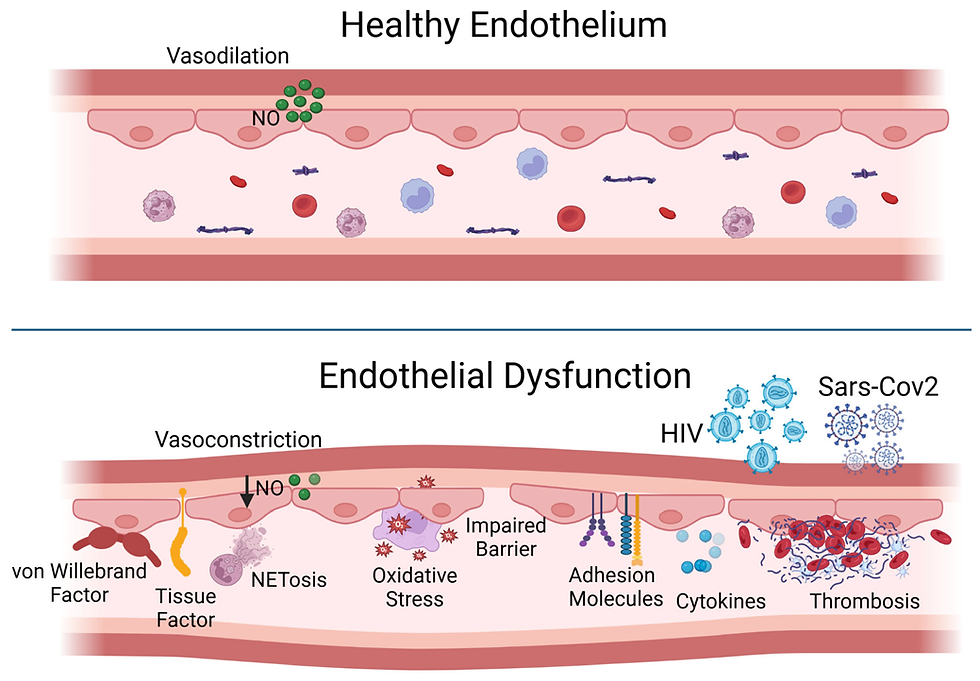
Endothelial Dysfunction: High blood pressure or high glucose creates "nicks" in the arterial wall.
Retention: LDL particles slip through/get stuck in these nicks.
Oxidation: Once stuck, the LDL must be damaged (oxidized) for the immune system to perceive it as a threat and form plaque.
The "Swap and Shrink" – How Good LDL Goes Bad
The focus of the podcast was heavy on the ApoB count (the number of trucks). The logic is simple: fewer trucks equals fewer accidents. But this ignores a critical biochemical transformation that happens to these trucks before they ever reach your arterial wall.
A standard LDL particle is large, buoyant, and stable. However, in an environment of metabolic dysfunction—specifically high triglycerides and insulin resistance—these particles undergo a process that turns them into Small Dense LDL (sdLDL).
1. The Cargo Swap (The CETP Handshake)
When your liver is overproducing triglycerides (usually from excess sugar and fructose), your blood becomes crowded with triglyceride-rich VLDL particles. An enzyme called CETP acts as a "shifter," swapping the contents between particles.
It takes the Cholesteryl Ester (CE) out of the LDL.
It shoves Triglycerides into the LDL in its place.
The Original Purpose: Energy Recycling
Evolution is incredibly stingy. If we have excess energy in our blood (triglycerides), the body doesn't want to waste it.
The Ancestral Context: Our ancestors rarely had chronically high triglycerides. When they did have a surplus, CETP would gently move some of those triglycerides into LDL so that the liver (via Hepatic Lipase) could process them and turn them back into fuel or bile.
The "Clean-Up" Crew: In this context, LDL wasn't just a cholesterol delivery truck; it was a "return-to-sender" envelope for spare energy.
The Metabolic Aside: Where do those Triglycerides come from?
It is a common myth that dietary fat creates high blood triglycerides. In reality, the primary driver of high triglycerides is excess Glucose and Fructose. Through a process called De Novo Lipogenesis (DNL), the liver converts excess sugar into a specific saturated fat: Palmitate (C16).
Endogenous Palmitate (Made by you): This "homemade" fat is what the liver stuffs into VLDL. It is a sign of energy overflow and insulin resistance.
Exogenous SFA (Eaten by you): When you eat saturated fats (like those in butter or coconut oil) without a spike in insulin, they are readily used for energy or shuttled into stable storage. They rarely contribute to the "Triglyceride Panic" unless they are paired with high-glycemic carbs that "lock" the fat cells and force the liver to process everything at once.
2. The Shrinkage (Hepatic Lipase)
Now you have an LDL particle that is "cholesterol-poor" but bloated with triglycerides. This makes it a target for Hepatic Lipase, an enzyme that shreds those triglycerides for fuel. As the triglycerides are removed, the particle loses its internal volume and physically collapses, becoming a small, dense, and fragile version of its former self.
The Structural Failure
The reason this is a "glitch" is that the LDL particle was never designed to be a high-capacity triglyceride carrier.
The Collapse: When an LDL particle becomes "bloated" with triglycerides, its protein shell (ApoB) gets stretched and distorted.
Target Practice: This distorted shape is exactly what Hepatic Lipase is "trained" to look for. When the enzyme shreds those triglycerides, the particle doesn't just shrink—it collapses.
The Result: You are left with the Small Dense LDL (sdLDL). This particle is an evolutionary "scrap" that the body doesn't know how to handle efficiently, so it stays on the "highway" until it gets snagged by the arterial wall.
3. Why sdLDL is the Ultimate Arsonist
The podcast argues that "lower is better," but science shows that sdLDL is uniquely dangerous for three reasons that have nothing to do with total count:
Permeability: Because they are so small, they slip through the arterial lining much more easily than large, buoyant LDL.
Retention: They are chemically "stickier." They snag onto the proteoglycan "velcro" in your arteries and stay there.
Oxidative Vulnerability: This is the "Seed Oil Connection." If you have replaced saturated fats with linoleic acid, the phospholipid shell of these shrunken particles is made of "explosive" PUFAs. Because sdLDL has a higher residence time (it stays in the blood longer), it is much more likely to oxidize and trigger an immune response.
The podcast treats LDL as a fixed variable. They suggest that if you use seed oils to lower the number of particles, you've solved the problem. But physiology shows us that heart disease is driven by the modification of LDL into sdLDL. By ignoring the 'Swap and Shrink' mechanism, they are missing the fact that a high-triglyceride environment turns even a 'low' number of particles into a high-risk scenario. It’s not the number of trucks; it’s whether those trucks have been shrunken and destabilized by metabolic arsonists."
The Biochemical Relay: How Diet Becomes Cargo (The LCAT Bridge)
Before CETP can "swap" anything, the cholesterol must first be packaged into a transportable form. This happens through a relay race between two main players: HDL (the collector) and LDL (the deliverer).
1. The LCAT "Packaging Plant"
Cholesterol starts as "Free Cholesterol" on cell membranes or the surface of lipoproteins. In its free state, it’s messy and can’t be packed densely.
The Enzyme: LCAT (Lecithin-Cholesterol Acyltransferase) sits on the surface of HDL.
The Process: LCAT grabs a "tail" (a fatty acid) from a nearby phospholipid (Lecithin) and stitches it onto the free cholesterol.
The Result: This creates a Cholesteryl Ester (CE). Because it now has a fatty tail, it becomes entirely water-hating and dives into the center of the HDL particle to stay dry.
The Diet Link: This is where your choice of fat matters most. The "tail" LCAT uses is pulled directly from your dietary pool. If you eat Seed Oils, LCAT is forced to use Linoleic Acid. You are now officially manufacturing "Dynamite" cargo (Linoleate-CEs) before it even touches an LDL particle.
2. The CETP "Switchyard"
Now that the HDL is full of these freshly packaged CEs (either stable "Stone" or volatile "Dynamite"), it meets an LDL particle. This is where CETP (the shifter) intervenes (again).
The Handshake: CETP creates a bridge between the HDL and the LDL.
The Distribution: It moves those CEs from the HDL into the LDL core.
The Overdrive: In a healthy state, this is a slow, controlled exchange. But as we discussed, if Triglycerides are high (from sugar), CETP goes into a "frenzy," dumping the CEs into LDL even faster to make room for incoming triglycerides.
3. The "Swap and Shrink" (Updated)
Now the stage is set. Thanks to LCAT, your LDL is now carrying cargo that reflects your diet. If that diet is high in seed oils, your LDL trucks are now loaded with volatile Linoleate-CEs.
When you add high-sugar intake to this mix, the liver pumps out VLDL stuffed with triglycerides (endogenous Palmitate). CETP sees this massive concentration of triglycerides and begins the "Handshake of Death":
It takes those Linoleate-CEs (the dynamite) out of the LDL and trades them into VLDL.
It shoves Triglycerides into the LDL.
Eventually, that VLDL will also be processed and remodeled.
The Linoleate-CEs often end up being traded back into other LDL particles or staying in circulation within "Remnant" particles.
We haven't removed the dynamite from the system; you've just turned the system into a high-speed trading floor of volatile fats, ensuring that every particle on the road eventually becomes small, dense, and oxidized.
The podcast treats LDL like a static number, but it’s actually the final product of a complex relay race. LCAT packages your dietary fats into the 'oil barrels' (CEs), and CETP determines which 'trucks' carry those barrels. When you eat seed oils and sugar together, you create a perfect storm: LCAT creates 'explosive' cargo, and CETP/Hepatic Lipase shrink the trucks until they are small, dense, and ready to snag on your arterial walls. You aren't just looking at a high LDL count; you’re looking at a structural failure of the entire transport system.

Image Credit: ResearchGate
The Cargo Integrity—"Stone vs. Dynamite"
The central claim made at 1:36:05 of the podcast is that a lower number of LDL particles (ApoB) is always better, even if the individual particles are more "fragile." They argue that a "bonfire" of many stable particles is more dangerous than a few "sparks" of unstable ones.
Biochemistry suggests the exact opposite. To understand why, we have to look at both the Core (the cargo) and the Shell (the packaging).
1. The Shell: The Phospholipid Shield
Every LDL particle is wrapped in a single layer of phospholipids. These molecules have a "head" that touches the watery blood and a "tail" that faces the oily center.
The SFA/MUFA Shield: If your diet is rich in stable fats, those tails are made of Saturated or Monounsaturated fats. This creates a "tough skin" that is resistant to environmental stress.
The PUFA Breach: When you consume seed oils, your body incorporates Linoleic Acid into this outer shield. Because PUFAs are "kinked," they make the shell more fluid but also chemically "leaky" and highly susceptible to oxygen. Your truck no longer has a steel hull; it has a paper-thin skin made of tinder.
2. The Core: Stone vs. Dynamite (Cholesteryl Esters)
Inside that shell are the Cholesteryl Esters (CE)—the "oil barrels" meant for delivery.
Saturated Cargo (The Stone): As we saw earlier, when LCAT attaches a Saturated Fat (like Palmitic acid) to cholesterol, it creates a "stone." If a spark of oxidative stress hits a stone, nothing happens. The truck remains intact.
Seed Oil Cargo (The Dynamite): In a seed-oil-heavy diet, LCAT packages the cholesterol with Linoleic Acid (PUFA). These "Linoleate-CEs" are highly volatile.
3. The Chain Reaction: A Total System Failure
This is where the podcast's "Quantity over Quality" logic fails. In a PUFA-rich particle, the Shell and the Core work together to create a catastrophe:
The Ignition: Because the Shell is made of fragile PUFAs, a "spark" (free radical) easily ignites the outer layer.
The Breach: The fire moves from the shell into the Core.
The Explosion: Because the core is packed with "Dynamite" (Linoleate-CEs), a lipid peroxidation chain reaction occurs. One spark doesn't just damage one spot; it "blows up" the entire particle.
4. Why "Lower" Isn't Better if the Cargo is Explosive
At 1:27:50, the podcast downplays the fact that seed oils increase oxidized LDL. They argue that because the total count is lower, the risk is lower.
SFA Trucks: May stay on the road longer (due to receptor downregulation), but they are stable. If they enter the arterial wall, they are just "parked trucks."
PUFA Trucks: They are "chemical fires." The moment they oxidize, they transform into OXLAMs (Oxidized Linoleic Acid Metabolites). The immune system sends in macrophages to "clean up" the fire, turning them into foam cells.
5. The "Mass Action" Fallacy
The podcast relies on the "Mass Action" principle—the idea that sheer volume drives the disease. But in a system of high-stakes chemistry, Volatility trumps Volume.
Lane Norton is telling you to clear the highway of traffic by filling the remaining cars with high explosives. Physiology tells us it is better to have a busy highway of stable 'stone' carriers than a sparsely populated road of 'dynamite' trucks. By focusing only on the number of particles and ignoring the oxidative potential of the Linoleic Acid cargo, he is recommending a protocol that creates more 'fire' per particle.
Feature | Saturated / MUFA Diet | Seed Oil (PUFA) Diet |
LCAT Fatty Acid Source | Palmitic / Oleic (Stable) | Linoleic Acid (Volatile) |
LDL Core Cargo | Stable Cholesteryl Esters | Fragile Linoleate-CEs |
Oxidative Potential | Low: No "chain reaction" possible. | High: Rapid autoxidation. |
Plaque Impact | Benign accumulation (if any). | Inflammatory foam cell formation. |
The Liver's "Pre-Packaging" (ACAT vs. LCAT)
While LCAT handles the packaging for the "Cleanup Crew" (HDL) out in the blood, the liver has a different enzyme called ACAT2 (Acyl-CoA:Cholesterol Acyltransferase) that handles the packaging for the "Delivery Crew" (VLDL/LDL).
Inside the Liver: Before a VLDL particle is even born, the liver takes free cholesterol and "wraps" it into a Cholesteryl Ester (CE) using ACAT2.
The Virgin Cargo: This means when VLDL leaves the liver, it is already packed with a dense, stable core of cholesterol. It isn't "messy" or "free."
Sequence of Events:
ACAT2 (Liver): Pre-packages stable "Stone" cargo into VLDL.
Delivery: VLDL/LDL delivers Stone to tissues.
Cleanup: Tissues release "messy" free cholesterol to HDL.
LCAT (Blood): Packages messy cholesterol into new cargo (Stone or Dynamite depending on your diet).
CETP (Blood): Swaps the cargo between HDL and LDL (The Reload).
Lipase (Liver): Shreds any triglyceride-bloated particles into small, dense arsonists.
The Evolutionary Signal—"Panic Clearance" vs. "Steady State"
In the podcast, the "totality of evidence" relies heavily on the fact that seed oils lower LDL levels. Lane point to this as the ultimate proof of health. But evolutionarily, we have to ask: Why is the liver so eager to clear seed oils from the blood, while it allows saturated fats to circulate?
1. The Energy Sentry (Saturated Fat)
From an evolutionary standpoint, saturated fat is the gold standard for long-term energy storage and structural integrity.
The Liver’s Logic: When you consume saturated fat (C16/C18), your liver senses an abundance of stable energy. It downregulates the LDL receptors (turning off the "vacuum").
The Evolutionary Purpose: Nature wants these stable "stone" carriers to circulate. They provide a steady supply of energy to muscles and serve as "immune sentries" that can neutralize bacterial toxins. Because the cargo is stable, there is no risk in letting them stay on the road.
2. The Volatility Alarm (Seed Oils)
When you flood the system with industrial seed oils (Linoleic Acid), the liver encounters a molecule it rarely saw in ancestral environments.
The Liver’s Logic: The liver recognizes Linoleic Acid as chemically volatile. If left in circulation, these "dynamite" trucks will oxidize rapidly.
The "Panic" Response: The liver upregulates receptors to pull these fragile fats out of the blood as fast as possible. It’s not "health"; it’s a defense mechanism to sequester volatile fats into the liver’s antioxidant-rich environment before they can explode in the arteries.
The Result: Your blood test shows "Low LDL," and your doctor cheers. But your liver is actually working overtime to protect you from the very oil you were told was "heart-healthy."
3. The MUFA Middle Ground (Olive Oil/Avocado)
Monounsaturated fats (Oleic Acid) provide the best of both worlds. They are chemically stable (only one double bond) but keep the liver's membranes fluid, allowing for efficient (not panic-driven) clearance. This is why ancestral populations eating MUFA-rich diets have the lowest rates of heart disease.
Critics point to the 'fast clearance' of LDL when consuming seed oils as proof of their benefit. But in physiology, speed is often a sign of a defense mechanism, not a health benefit. The liver clears PUFA-rich LDL rapidly because it is chemically volatile—it’s a 'panic response' to remove flammable cargo from the highway. In contrast, Monounsaturated fats (like olive oil) allow for efficient clearance without the oxidative risk, while Saturated fats provide the ultimate stability. The goal isn't to clear LDL out of fear; it's to maintain a system where the cargo is stable enough to survive the trip.
Fat Type | Clearance Speed | Biological Reason | Resulting Risk |
SFA | Slow | "I'm full; let the energy circulate." | Low (Stable cargo, but high "traffic" if terrain is bad). |
PUFA | Fast | "Emergency Clearance": Get volatile fats off the road now. | High (The few that stay on the road are "explosive"). |
MUFA | Efficient | "Normal Operation": Smoothly recycling stable fuel. | Lowest (Stable cargo + low traffic). |
The Industrial Alchemy—"Pre-Lit Dynamite"
In the podcast, Layne Norton argues that the use of hexane solvents is a non-issue because the residues are minuscule. This is a "straw man" argument. The real danger of industrial processing isn't the solvent; it’s the RBD process (Refining, Bleaching, Deodorizing).
The "Triple Threat" of Oxidative Decay
Lane treats seed oils as "clean" PUFAs that lower LDL. But they are ignoring the Life Cycle of a Seed Oil, which is a journey of continuous degradation before it even reaches your bloodstream.
Stage 1: The Industrial "Birth" (Pre-Lit Dynamite)
As we noted, the extraction of seed oils requires high heat, chemical solvents (like Hexane), and a brutal deodorization process at/over 400°F (200°C). This is not "fresh" oil. By the time it is bottled, it is already a cocktail of OXLAMs and cyclic hydrocarbons.
The Reality: You are buying a product that has already undergone the very chemical damage (oxidation) that the medical establishment says only happens inside your arteries. You are loading your "trucks" with cargo that is already on fire.
Stage 2: The Shelf-Life "Slow Burn"
Unlike Saturated Fats, which are chemically "straight" and stable, the "kinked" double bonds in seed oils are magnetic targets for oxygen.
These oils sit in clear plastic bottles under supermarket fluorescent lights for weeks or months.
Light and room-temperature oxygen slowly turn those "kinks" into peroxides.
By the time you twist the cap, the "dynamite" has been sitting in a warm room for months, becoming more volatile by the day.
Stage 3: The Kitchen "Blast" (The Final Blow)
As Lane himself acknowledges, the real damage spikes when these oils hit the frying pan. When you take an already-degraded, shelf-worn oil and heat it again to sauté or fry, you trigger a thermal oxidation cascade.
You are creating HNE (4-Hydroxynonenal) and Acrolein—highly toxic compounds that bind to proteins and DNA.
The SFA Contrast: If you cook with Tallow or Ghee (SFA), the molecules are "armored." They have no double-bond "kinks" for oxygen to attack. You can heat them repeatedly, and the "Stone" remains Stone.
The "Sanity Check"
The mainstream narrative asks you to believe that replacing stable, ancestral Saturated Fats (which have been used for millennia) with an industrially processed, chemically deodorized, shelf-aged, and thermally blasted sludge is 'heart-healthy' simply because it lowers a single number on a blood test.
Let’s be clear: When you consume seed oils, you aren't just eating 'fragile' fats; you are consuming pre-oxidized chemical waste. You are overwhelming your body’s antioxidant defenses (like Vitamin E) just trying to neutralize the 'pre-lit dynamite' you had for lunch. No sane person, looking at the structural chemistry of a degraded PUFA molecule versus a stable SFA molecule, could conclude that the former is a safer building block for your cellular membranes and your LDL trucks."
The Evolutionary Mismatch—75x is Not "Minor"
At 1:53:55, the podcast dismisses the "Ancestral Diet" argument as "first principles" thinking that doesn't hold up against modern outcome data. This ignores the most basic rule of biology: The Dose Makes the Poison.
1. The Great Lipid Shift
For thousands of years, human tissues contained roughly 2% to 3% Linoleic Acid, derived from whole nuts, seeds, and animal fats.
The Modern Reality: Today, thanks to the constant "traffic" of seed oils in everything from salad dressing to oat milk, the average human’s fat tissue is 20% to 25% Linoleic Acid.
The Bio-Accumulation: Unlike sugar, which you can "burn off," Linoleic Acid has a half-life in your body of about two years. It integrates into your cell membranes, your brain, and—critically—the inner membrane of your mitochondria (Cardiolipin).
2. The Mitochondrial Arsonist
When your mitochondria are forced to use "kinked" seed oils for their internal structure, they become "leaky." This creates Oxidative Stress from the inside out.
The Connection to Heart Disease: High systemic oxidative stress is the "spark" that ignites the LDL trucks. You cannot separate the "low LDL" count from the fact that the entire "terrain" of the body is now more flammable.
Ceramides: Blaming the Wrong Source
Lane claims Saturated-fat-rich LDL particles are dangerous because they are "rigid" and produce ceramides that cause them to clump (aggregate) in the arterial wall.
This is a classic case of identifying the right molecule but the wrong source. While it is true that ceramide-rich LDL aggregates, the Palmitate (saturated fat) required for ceramide synthesis is primarily produced by the liver through De Novo Lipogenesis (DNL)—a process triggered by excess glucose and fructose, not dietary fat intake (unless one is eating a diet rich in insulin inducing carbs + foods high in Palmitic Acid).
High insulin + high sugar = DNL = Palmitate = Ceramides.
By blaming dietary saturated fat, the podcast misidentifies a symptom of metabolic syndrome as a dietary poison.
Ceramides and the LDL Receptor
Ceramides directly interfere with how our body handles LDL.
Receptor Paralysis: High levels of Ceramides in the liver cell membranes actually inhibit the recycling of the LDL receptor.
The Result: The liver can’t pull LDL out of the blood even if it wants to. The "vacuum" isn't just turned off (downregulated); the motor is burnt out. This leads to high ApoB counts not because SFA is "bad," but because Ceramides (driven by sugar + SFA) have broken the system.
Physiological Downregulation (The SFA Scenario): When you eat Saturated Fat (SFA), your cells are "full." They signal the liver to stop making as many LDL receptors. This is the body being efficient. The receptors that are there work perfectly; they just don't need to work as hard because the cell's energy needs are met. This leads to higher ApoB on paper, but the "trucks" are still stable.
Pathological Dysfunction (The Ceramide Scenario): Ceramides don't just "signal" the receptor to take a break; they physically interfere with the cell membrane's ability to recycle the receptor to the surface. This is damage, not efficiency. This happens when Insulin is high, because Insulin is the gas pedal for the Ceramide synthesis pathway (the Sphingolipid pathway).
Feature | The Podcast View (PUFA/Seed Oils) | The Physiological Reality (SFA/MUFA) |
Primary Metric | Total ApoB Count | Particle Stability & Metabolic Health |
Risk Focus | Clumping (Ceramides) | Oxidation (PUFA Flammability) |
Metabolic Context | Ignored | Central (Insulin/DNL/sdLDL) |
Result | "Fragile" particles | "Stable" particles |
The goal of cardiovascular health is not just to have fewer delivery trucks (LDL); it is to ensure those trucks aren't carrying explosive cargo (PUFA) and aren't being manufactured by an overwhelmed liver (DNL).
The mainstream makes a fatal error: they blame the Palmitate you eat for the damage caused by the Palmitate your liver makes. When you eat saturated fat, your liver uses Palmitate as 'Stone'—stable cargo (Cholesteryl Esters) that keeps the LDL truck structurally sound. However, when you flood the liver with sugar, it triggers De Novo Lipogenesis, creating a 'panic supply' of Palmitate that is diverted into making Ceramides. These Ceramides sit on the surface of the LDL like 'glue,' causing them to clump together and stick to your arteries. The problem isn't the Saturated Fat in your steak; it’s the metabolic arson triggered by the sugar in your soda.
Mendelian Randomization: Correlation vs. Lifetime Causality
The Podcast Claim: Mendelian Randomization (MR) proves that lifelong exposure to low LDL cholesterol leads to significantly lower rates of cardiovascular disease.
The Rebuttal: MR studies are powerful, but they are often misinterpreted. Genetic variants that lead to low LDL often do so through pathways that also improve general metabolic efficiency. Crucially, these genetic "lottery winners" do not achieve low LDL by consuming industrially processed seed oils. Lowering LDL via diet (high PUFA) is biologically distinct from having a genetically superior LDL receptor system. The latter maintains large, buoyant particles, while the former can lead to fragile, PUFA-enriched particles.
Mendelian Randomization shows the benefit of having fewer 'trucks' on the road. It does not validate changing the cargo of those trucks. When you lower LDL using seed oils, you are utilizing the LCAT/CETP pathway to fill your LDL with Linoleate-Cholesteryl Esters. Physiology tells us that a particle packed with Saturated-CEs is a stable 'tanker,' while a particle packed with Linoleate-CEs is a 'chemical fire' waiting for a spark. You cannot equate 'Low LDL via Genetics' with 'Low LDL via Seed Oils' because the biochemical integrity of the particles is completely different
Conclusion: The Ghost in the Machine
We began this journey by looking at the mainstream's "Quantity-Only" model—a narrative that views your body as a simple pipe that gets clogged if there is too much "traffic" (ApoB). But as we’ve peeled back the layers of the Lipid Loop, a much more sophisticated story has emerged.
We’ve debunked the idea that LDL is a static, "bad" particle. Instead, we’ve seen that:
Phase 1 & 2: Your liver isn't making "errors"; it is precision-packaging stable cargo (ACAT2) for a vital delivery mission.
Phase 3 & 4: Your cleanup crew (HDL/LCAT) is only as good as the tools you give it. When you provide industrial seed oils, you turn a recycling system into a "Dynamite" factory.
Phase 5: Heart disease isn't a failure of numbers; it's a "Handshake of Death" (CETP) triggered by sugar and insulin that hollows out your trucks and leaves them stranded.
The podcast narrative suggests that SFA and particle count is the problem and seed oils is the solution. But this ignores the Cybernetic Intelligence of your metabolism. The system isn't "glitching"—it is reacting with atomic precision to an environment it wasn't designed to handle.
The Segue: From "Why" to "How"
Understanding why the system fails is the first step toward freedom. But how do we actually fix it? How do we ensure our "highway" is paved, our "trucks" are armored, and our "cargo" remains stone?
In Part 2, we move from the lab to the lifestyle. We will lay out the Stability Protocol: a five-pillar blueprint designed to optimize your vascular terrain, armor your lipid shells, and reclaim the ancestral peace your body was built for.
📢 A Note on "Living Science"
Science is not a static destination; it is a moving target. While the principles discussed here are grounded in decades of metabolic research, new peer-reviewed data emerges every day, I am committed to accuracy.
I am committed to accuracy. If you are a researcher, clinician, or dedicated student of physiology and you find a piece of data here that does not align with the latest high-quality evidence, please reach out. I welcome civil, evidence-based corrections. My goal is to keep this resource as the most accurate "No-Nonsense" guide to Cardio Vascular Health on the internet. Let’s get better together.
*Disclaimer:
The information provided in this blog is for educational and informational purposes only and should not be construed as medical advice. While every effort is made to ensure accuracy, the content is not intended to replace professional medical consultation, diagnosis, or treatment. Always seek the guidance of a qualified healthcare provider with any questions regarding your health, medical conditions, or treatment options.
The author is not responsible for any health consequences that may result from following the information provided. Any lifestyle, dietary, or medical decisions should be made in consultation with a licensed medical professional.
If you have a medical emergency, please contact a healthcare provider or call emergency services immediately.


Comments